
Building a Modern Device Lifecycle
CompleteSecure remote access to selected home-lab services without exposing the network directly to the internet.
Overview
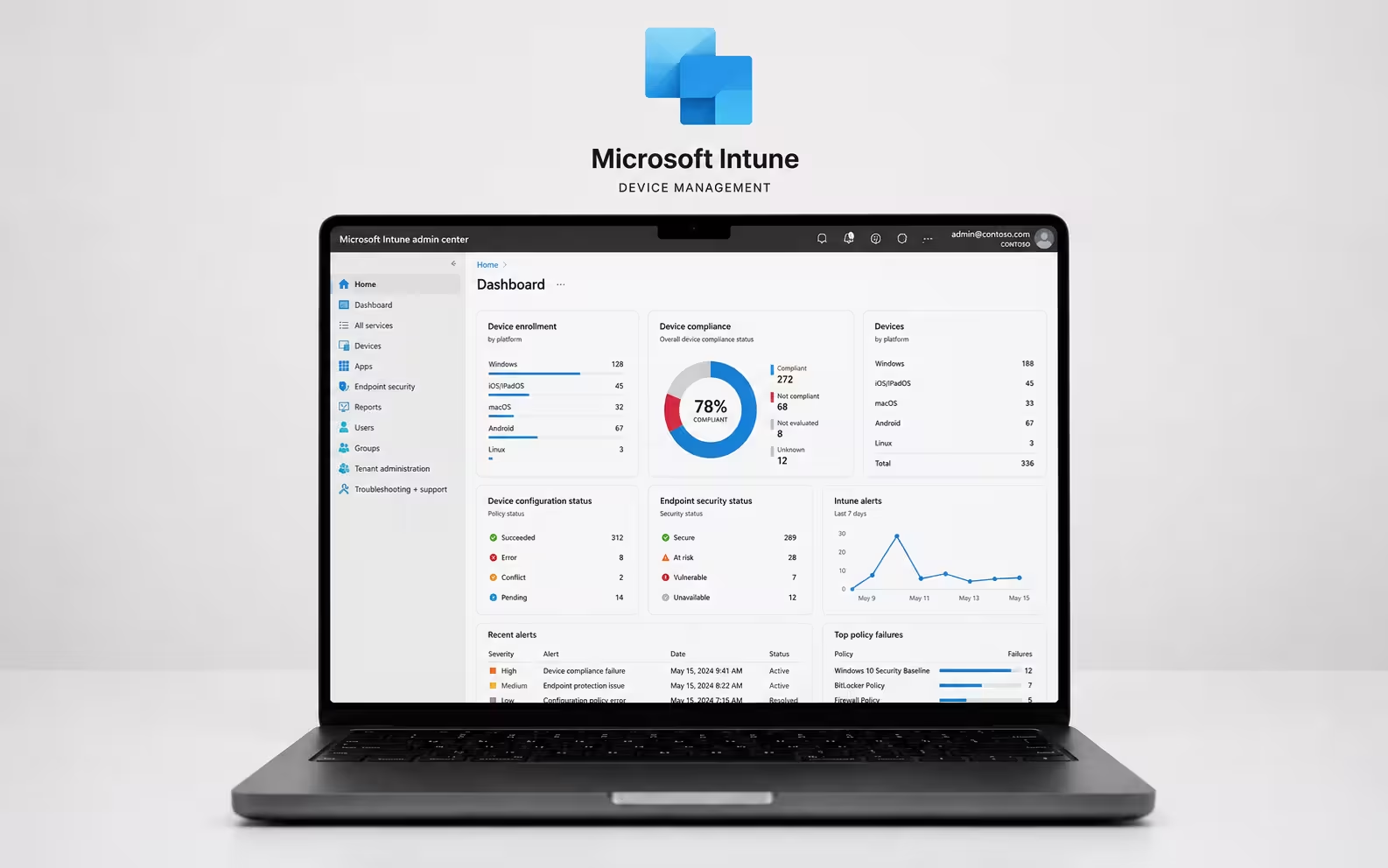
Like many organizations, our Windows environment had evolved over time. Devices were purchased at different points, managed through a combination of on-premises Active Directory and traditional deployment methods, and replaced as individual hardware reached the end of its life.
While that approach worked, it also created inconsistencies across the fleet. Devices varied in age, management capabilities, and configuration, making it more difficult to deliver a consistent user experience or take advantage of Microsoft’s modern management platform.
Rather than attempting a large-scale migration all at once, I developed a three-year device refresh strategy that would gradually transition our Windows fleet from traditional Active Directory management to Microsoft Intune.
The objective wasn’t simply to replace computers. It was to establish a sustainable lifecycle that aligned hardware refreshes with a cloud-first management strategy while minimizing disruption to end users and the business.

What I Built
-
Assessment
Evaluated the existing Windows fleet to understand device age, lifecycle, and readiness for modern management.
-
Roadmap
Developed a phased three-year refresh plan that aligned hardware replacement with Microsoft Intune adoption.
-
Modern Management
Designed a migration approach that transitions devices from on-premises Active Directory to Microsoft Intune over time.
-
Standardization
Defined consistent deployment standards, security baselines, and configuration profiles for future devices.
-
User Experience
Planned the rollout to minimize disruption by aligning migrations with normal hardware refresh cycles.
-
Documentation
Created implementation documentation and refresh guidelines to support future device deployments.
What I Learned
One of the biggest lessons from this project was that modernization doesn’t always require a massive migration project. In many cases, the most sustainable approach is to let the normal hardware lifecycle work in your favor.
By aligning device replacements with a long-term strategy, the organization can gradually move toward Microsoft Intune without creating unnecessary disruption or requiring every device to be migrated at once.
This project also reinforced that endpoint management is about more than technology. Successful modernization requires balancing user experience, budgeting, operational overhead, and long-term supportability. A well-planned roadmap provides direction for future decisions while allowing the organization to modernize at a pace that makes sense for the business.